Cambodian New Year
By Khmer Calendar editorial · Last updated 2026-09-26
Khmer New Year, known as Choul Chnam Thmey or Moha Sangkran, is Cambodia's largest annual festival. It runs for three public-holiday days around 14 to 16 April, closing the dry-season harvest and opening a new solar year with pagoda visits, family gatherings, merit-making for ancestors, and neighborhood games. Use this guide to follow each day's meaning and plan temple trips without the crowds.
Cambodian New Year
Khmer New Year, called Choul Chnam Thmey and often shortened to Moha Sangkran, welcomes Cambodia's solar new year each April. The country observes three official holiday days, normally 14 to 16 April and sometimes starting on the 13th, so workers can travel home, visit pagodas, and reunite with relatives. The timing follows the dry-season rice harvest, giving farming families a pause before field work resumes with the rains. City streets quieten as buses head to the provinces, while pagodas stay busy from early morning alms to evening blessings. Communities overseas often shift the gathering to the nearest weekend for convenience. A similar April solar-year festival is also kept in neighboring Laos, Myanmar, Thailand, and Sri Lanka, as well as parts of India, Bangladesh, and Nepal.
Moha Sangkrant
The opening day, Moha Sangkran, marks the moment the old year hands over to the new. The name comes from an old Sanskrit word for the sun's passage into a fresh cycle. On this morning many households tidy their homes, put on neat or new clothes, and set out small offerings for household and pagoda shrines. Family members light candles and incense, then bow three times before the Buddha image to recall his teaching and ask for calm in the year ahead. Many stop by the pagoda to offer food to monks and listen to a short blessing. A familiar custom is a short blessing with clean water: dabbing the face at dawn, the chest near midday, and the feet before sleep, as a wish for clarity, steadiness, and safe travel.
Veareak Vanabat
The middle day, Veareak Vanabat, is set aside for kindness and remembrance. Families prepare food, clothes, or small cash gifts for neighbors in need, including elderly people living alone, low-income households, and helpers around the village. Many then continue to the local pagoda for a dedication rite, where monks chant and attendees transfer merit to parents, grandparents, and teachers who have passed away. The mood is quieter than the first day, with shared meals, short visits to relatives, gifts for neighbors, and in many wats the start of building small sand stupas in the courtyard.
Veareak Laeung Sak
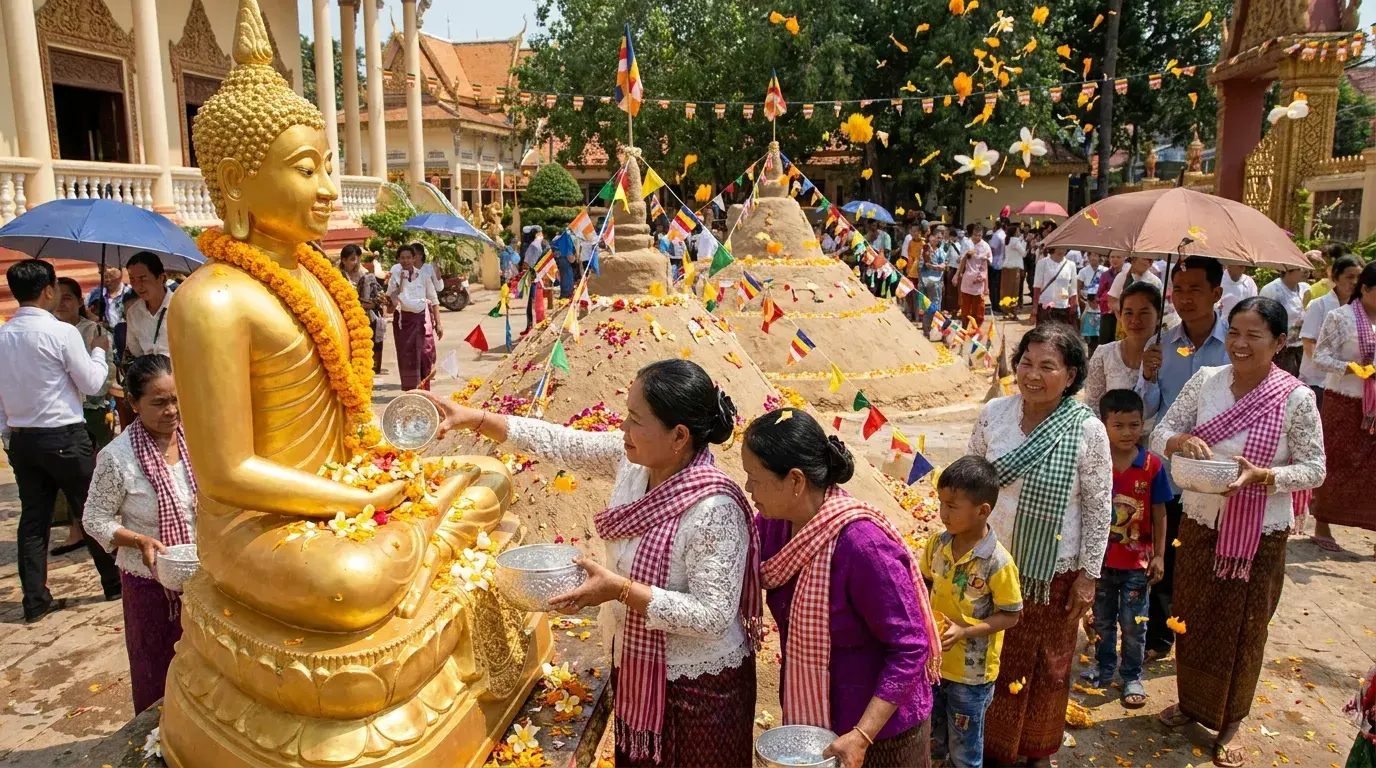
The closing day, Veareak Leung Sak, opens the new reckoning of the year. The focus moves to cleansing and respect. At pagodas, devotees gently pour scented water over Buddha statues, and monks are invited for blessings and a meal. Laypeople also help wash pagoda halls, statues, and stupas that gathered dust in the dry season. At home, younger members pour fragrant water over the hands and feet of parents and grandparents, then kneel to receive advice and good wishes for the months ahead. The washing is understood as a symbol: letting past mistakes fall away and entering the new year with a clear and generous mind, which families believe supports health, steady work, and harmony.
New Year's customs
Pagoda courtyards fill with two familiar sights during the festival. One is the sand stupa: visitors pile damp sand into a tall central mound for the celestial shrine where the Buddha's relics are honored, ringed by four smaller mounds for his great disciples Sariputta, Moggallana, Ananda, and Maha Kassapa. People place flags, candles, and flowers on top and leave small coins as a sign of generosity, then circle the mound clockwise with family. The other is Srang Preah, the gentle pouring of scented or chalk-tinted water over Buddha images and over the hands of elders to request forgiveness and blessings. Kitchens have their own marker too: kralan, sticky rice mixed with coconut milk, beans, and grated coconut flesh, packed into bamboo tubes and slow-roasted until fragrant, then shared with guests and neighbors.
Traditional games
Afternoons belong to folk games, known in Khmer as folk amusements, which turn quiet streets and pagoda yards into lively meeting places. Friends and cousins gather after the morning offering to dance, drum, and play in teams. The best-known contests on this site's New Year calendar pages are Chol Chhoung, where two lines toss a twisted scarf-ball and sing in reply, Leak Kanseng, where one player hides a scarf behind seated friends, and rope-pulling, which draws loud cheers in wat courtyards. Most games start mid-afternoon once the heat eases, and anyone passing by is welcome to join. Elders say these pastimes keep both reflexes and friendships sharp after the busy harvest.